Cinema brings together storytelling, technology, creativity, and teamwork. Behind every film, several departments work together to turn an idea into a finished visual story. Film production courses can help aspiring filmmakers understand this process and develop skills across different areas of filmmaking.
From direction and screenwriting to cinematography, editing, sound, and graphics, a structured course can introduce students to the complete filmmaking process. If you are exploring film production courses in Chennai, comparing programs across India, or considering online learning, understanding what a course offers can help you make an informed choice.
What Are Film Production Courses?
Film production courses are educational programs that introduce students to the creative and technical aspects of filmmaking.
A film involves several interconnected departments. Writers develop stories, directors shape the creative vision, cinematographers create visuals, editors structure the footage, sound professionals build the audio experience, and graphics teams support the final production.
Depending on the institution, film courses may include classroom learning, practical exercises, workshops, film projects, screenings, and industry interactions.
Before choosing a course, students should review its curriculum, practical training, faculty, facilities, duration, and learning format.
What Do You Learn in Film Production Courses?
A well-structured film course can introduce students to several important areas of filmmaking.

Direction & Screenwriting
Every film begins with an idea and a story.
Students can learn about story development, screenplay structure, character creation, scene construction, visual storytelling, and directorial planning. These skills help learners understand how an idea can develop into a film.
Cinematography
Cinematography gives a film its visual language.
Students explore cameras, lenses, lighting, framing, composition, and camera movement. Practical training can help them understand how visual choices influence the mood and meaning of a scene.
Editing
Editing brings recorded footage together to create a complete narrative.
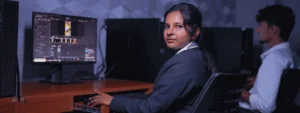
Students can learn about shot selection, continuity, pacing, storytelling, and post-production workflows. Editing also teaches learners how different shots can work together to create emotion and narrative flow.
Sound
Sound is an important part of the filmmaking experience.
Students can explore dialogue recording, sound effects, ambience, audio editing, and basic sound design. Understanding sound helps filmmakers create a stronger connection between visuals and audio.
Graphics & Animation
Modern filmmaking increasingly uses digital graphics, animation, compositing, and visual effects.
Learning these areas can help students understand how digital elements support storytelling during production and post-production.
Film Production Courses in Chennai
Chennai has a strong connection with Tamil cinema and offers opportunities for people interested in film education and visual media.
When searching for film production courses in Chennai, students should look beyond the location. The curriculum, practical facilities, faculty experience, and opportunities for industry interaction are equally important.

Look for courses that offer:
- Practical filmmaking exercises
- Experienced faculty
- Industry interactions and workshops
- Suitable filmmaking equipment
- Editing and post-production facilities
- Student projects
- A clear and structured curriculum
A course that covers multiple filmmaking departments can also help students discover which area of cinema interests them most.
Film Production Courses in India: What Should You Consider?
Students looking for film production courses in India have many types of programs to explore. Some focus on a particular department, while others provide broader film education.
Before selecting a course, consider:
Curriculum: Does it cover the filmmaking areas you want to learn?
Practical training: Will you get opportunities to apply what you learn?
Faculty: Do the instructors have relevant professional or teaching experience?
Facilities: Does the institution provide access to suitable equipment and production facilities?
Industry exposure: Are there workshops, guest sessions, or interactions with film professionals?
Course duration: Does the duration provide enough time to develop both knowledge and practical skills?
Comparing these factors can help you choose a course based on learning value rather than the course title alone.
Film Production Courses Near Me: What Should You Look For?

Searching for film production courses near me can be useful when you want to study close to home.
However, convenience should not be the only consideration. Check whether the course offers the right curriculum, practical training, facilities, and learning environment.
Also consider the class schedule and travel time. A convenient location can make regular attendance easier, especially for students and working professionals.
Film Production Courses Online vs Classroom Learning
Film production courses online can provide flexibility and convenient access to lessons. They can be useful for learning theory, filmmaking concepts, and software-based subjects from different locations.
However, filmmaking also involves hands-on work.
Operating cameras, setting up lighting, recording sound, directing scenes, working with a crew, and managing a production can benefit from in-person learning.
Online learning can offer:
- Flexible schedules
- Remote access to lessons
- Convenience for learners in different locations
- Self-paced learning options in some programs
Classroom learning can offer:
- Direct interaction with instructors
- Hands-on equipment training
- Collaborative production exercises
- Immediate feedback
- Practical filmmaking experience
The right format depends on your goals, schedule, and preferred learning style.
How to Choose the Right Film Production Course
Before enrolling in a filmmaking program, consider these key factors:

1. Curriculum
Make sure the course covers the departments and skills you want to explore.
2. Practical Training
Look for opportunities to work on filmmaking exercises and projects rather than relying only on theory.
3. Faculty
Explore the professional and teaching background of the instructors.
4. Facilities
Check whether students have access to cameras, editing systems, sound facilities, studios, or other relevant resources.
5. Industry Exposure
Guest lectures, workshops, and interactions with working professionals can complement classroom learning.
6. Schedule
Choose a program that fits your existing commitments and allows you to attend consistently.
7. Student Projects
Practical projects can help you apply your learning and understand the filmmaking process more clearly.
Why Consider SA Film Academy for Film Production Courses in Chennai?
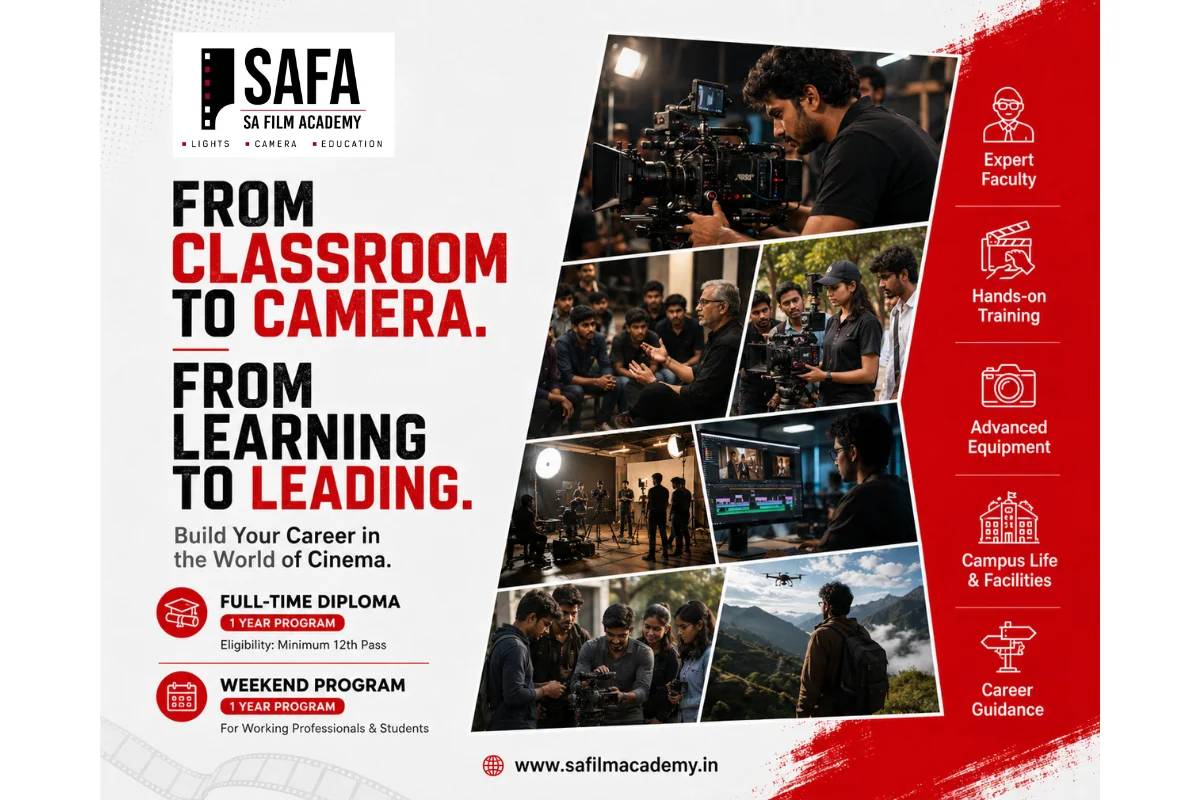
For learners exploring film making courses in Chennai, SA Film Academy offers a 1-Year Diploma in Film Technology covering five major filmmaking departments:
- Direction & Screenwriting
- Cinematography
- Editing
- Sound
- Graphics & Animation
The program combines theoretical learning with practical filmmaking and industry-oriented exposure. SAFA also conducts workshops, guest sessions, and cinema-related activities to complement students’ learning.
The academy offers a weekend program with classes on Saturdays and Sundays. This format can suit college students, working professionals, freelancers, entrepreneurs, and cinema enthusiasts who want to learn filmmaking alongside their existing commitments.
Start Your Filmmaking Journey
Choosing between different film production courses is an important step for anyone interested in cinema.
Look beyond the course name and compare the curriculum, practical training, faculty, facilities, industry exposure, schedule, and project opportunities.
If you are looking for film production courses in Chennai, explore the 1-Year Diploma in Film Technology at SA Film Academy and discover the different creative and technical departments involved in filmmaking.
Have a story in your mind? Learn how to bring it to the screen.
Start your filmmaking journey with SA Film Academy.