Every great video needs more than good footage. Editing brings images, sound, timing, and storytelling together to create a finished visual experience. A well-structured video editing course can help aspiring editors understand this process and develop practical post-production skills.
Video editing is now used across films, short films, advertisements, YouTube videos, social media content, documentaries, corporate videos, and other digital media. As video continues to become an important form of communication, editing skills can be useful for both aspiring filmmakers and digital content creators.
If you are searching for a video editing course online, exploring video editing courses in Chennai, or looking for a professional classroom program, understanding what you will learn can help you choose the right course.
What Is a Video Editing Course?
A video editing course introduces students to the creative and technical process of transforming raw footage into a finished video.
Editing involves much more than simply cutting unwanted clips. An editor works with shot selection, sequencing, pacing, sound, colour, graphics, and storytelling to shape the final production.
A structured course can introduce students to areas such as:
- Organising and managing video footage
- Cutting and arranging clips
- Building sequences
- Storytelling through editing
- Audio editing
- Colour correction
- Titles and graphics
- Transitions and effects
- Export and post-production workflows
The exact curriculum differs between institutions. Therefore, students should check the software, practical training, projects, faculty, and course duration before enrolling.
What Do You Learn in a Video Editing Course?
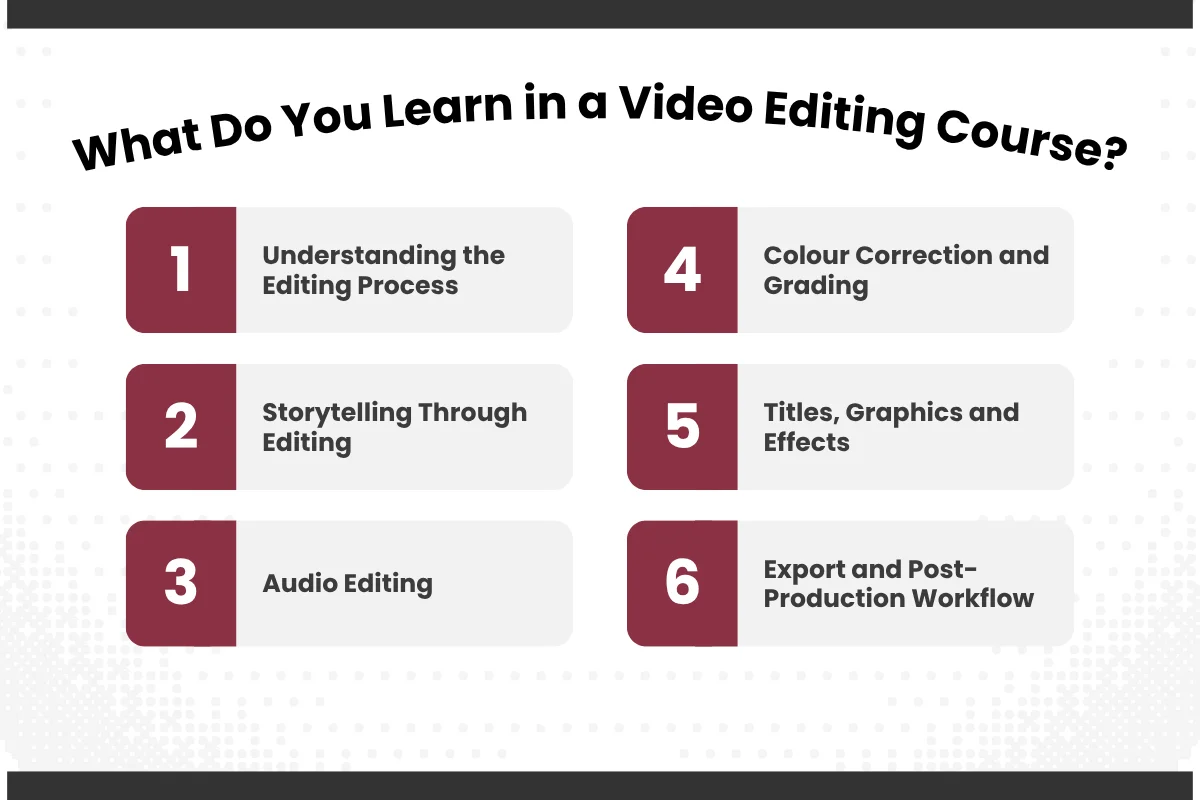
Understanding the Editing Process
The first step is understanding how an editing workflow works.
Students can learn how to import, organise, review, select, and arrange footage. They can also understand how different shots contribute to a sequence and how an editor works with footage received from a production team.
A structured workflow can make the editing process more organised and efficient.
Storytelling Through Editing
Editing is also a form of storytelling.
The same footage can create different experiences depending on the order, duration, and combination of shots. Students can learn about pacing, continuity, rhythm, shot selection, and narrative structure.
These skills are particularly important for film editing, where the editor works closely with the director to shape the final story.
Audio Editing
Good visuals need appropriate sound.
A video editing course can introduce students to dialogue, music, ambience, sound effects, and basic audio mixing. They can learn how to synchronise audio with visuals and maintain a balanced sound experience.
Understanding audio also helps editors recognise how sound can influence the mood and pace of a scene.
Colour Correction and Grading
Colour can influence the overall appearance and mood of a video.
Students can learn the fundamentals of colour correction, consistency between shots, and basic colour grading. These skills can help create a more polished and visually consistent final product.
Titles, Graphics and Effects
Modern videos often use titles, text, motion graphics, transitions, and visual effects.
Students can explore how these elements can support a video’s message without distracting from the story. The focus should remain on using effects purposefully rather than adding unnecessary visual elements.
Export and Post-Production Workflow
The final stage involves preparing the completed video for delivery.
Students can learn about export settings, formats, resolutions, aspect ratios, and other basic post-production requirements for different platforms.
Understanding this workflow helps editors prepare projects for cinema, television, websites, social media, and other digital platforms.
Why Learn Video Editing?
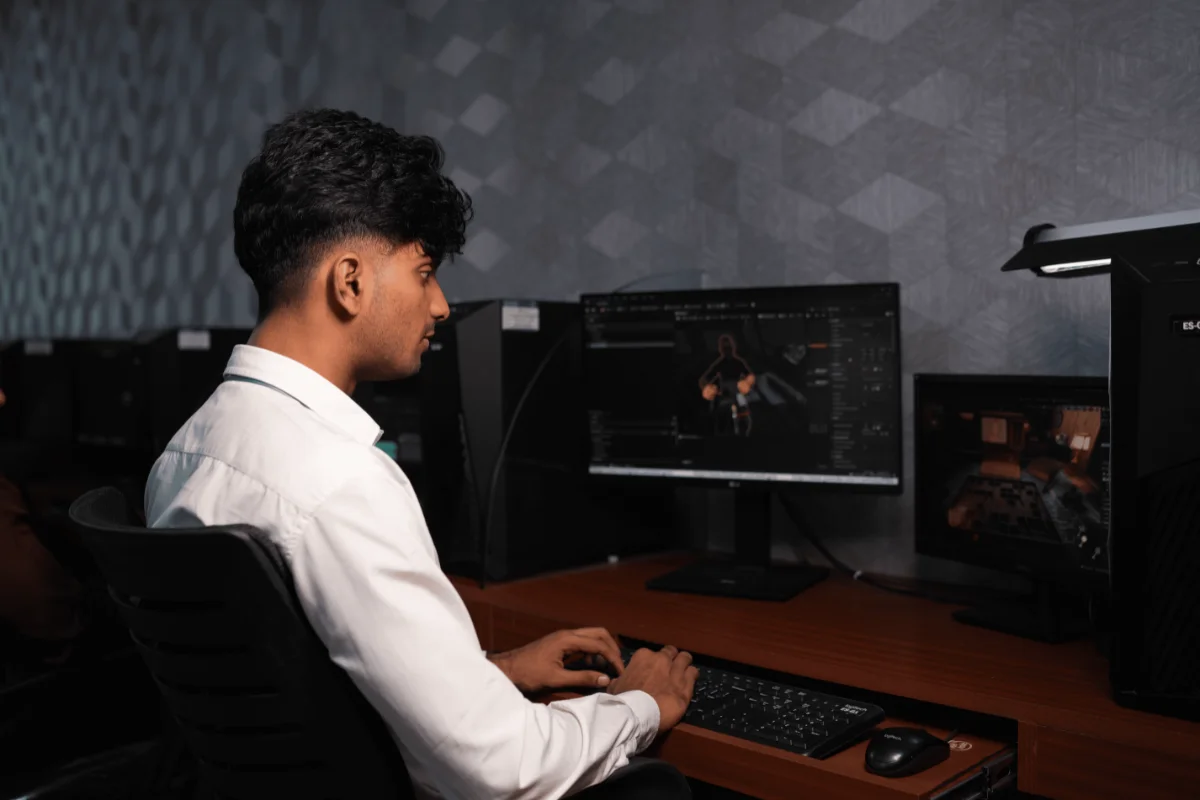
Video editing skills have applications across many areas of the media industry.
Editors can work with different types of content, including:
- Feature films
- Short films
- Documentaries
- YouTube videos
- Social media content
- Advertisements
- Corporate videos
- Music videos
- Wedding and event videos
Learning editing can also benefit filmmakers who want to understand the complete production process.
A director who understands editing can plan shots with post-production in mind. A cinematographer can understand how framing and continuity affect the final edit. Similarly, content creators can use editing skills to make their videos more engaging and structured.
Video Editing Course Online vs Classroom Learning
A video editing course online can provide flexibility for learners who prefer studying from home. Online programs can be useful for software-based learning, theoretical concepts, and learners who have limited access to classroom programs.
However, classroom learning offers a different experience.
Online learning can offer:
- Flexible study schedules
- Remote access to lessons
- Convenience for working professionals
- Learning from different locations
- Opportunities to practise software at your own pace
Classroom learning can offer:
- Direct interaction with instructors
- Immediate feedback
- Guided practical exercises
- Collaborative learning
- Discussions around real projects
- A structured learning environment
The right option depends on your goals, schedule, location, and preferred learning style.
If you want to develop editing skills through practical filmmaking projects, direct guidance and classroom interaction can be valuable.
Video Editing Courses in Chennai: What Should You Look For?
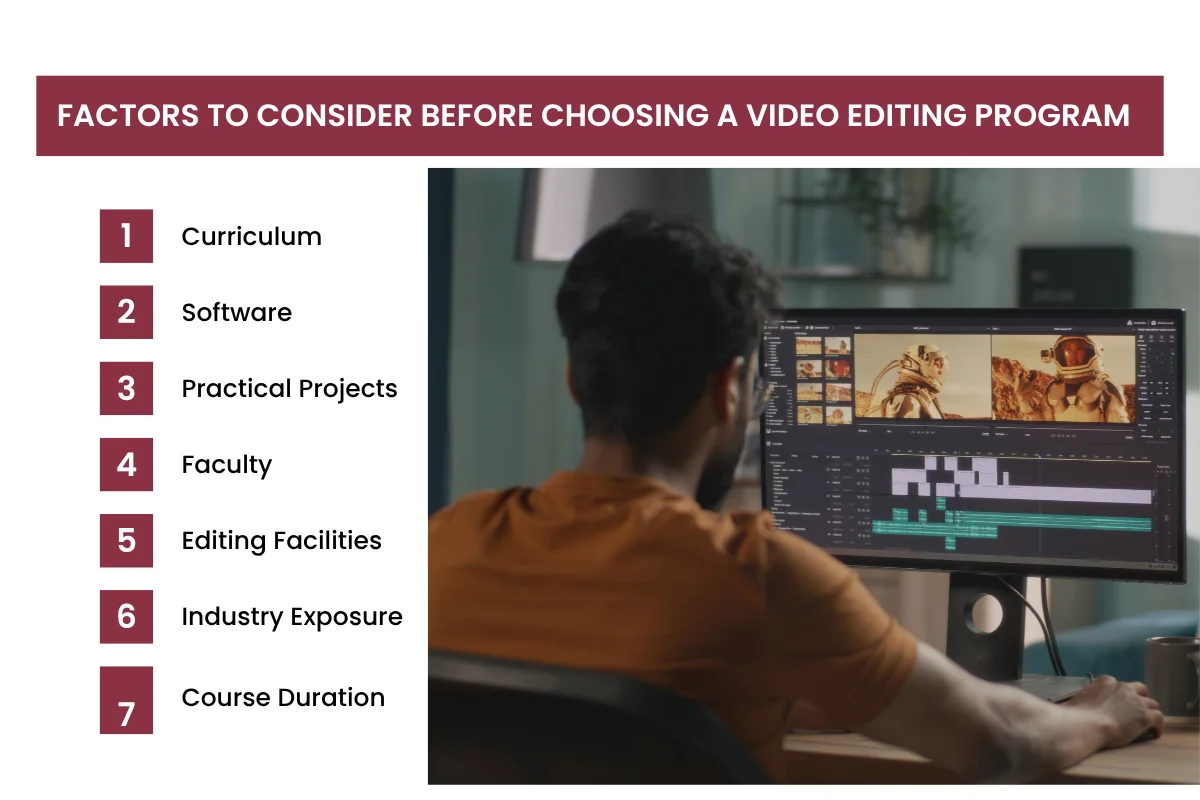
Students searching for video editing courses in Chennai have several factors to consider before choosing a program.
Curriculum
Check whether the course covers editing fundamentals, storytelling, audio, colour, graphics, and post-production workflows.
Software
Understand which editing and post-production software is included in the curriculum.
Practical Projects
Look for opportunities to edit real or structured projects. Practical work allows students to apply concepts and understand the challenges involved in post-production.
Faculty
Explore the professional and teaching experience of the instructors.
Editing Facilities
Check whether students have access to suitable editing systems and other post-production resources.
Industry Exposure
Workshops, guest sessions, and interactions with professionals can provide additional perspectives on the editing profession.
Course Duration
Make sure the course provides enough time to learn the fundamentals and practise them through projects.
What Makes a Professional Video Editing Course?
A professional video editing course should go beyond teaching software buttons and basic cutting techniques.
Professional editing requires an understanding of storytelling, visual continuity, pacing, sound, colour, and collaboration.
When evaluating a course, look for training that combines:
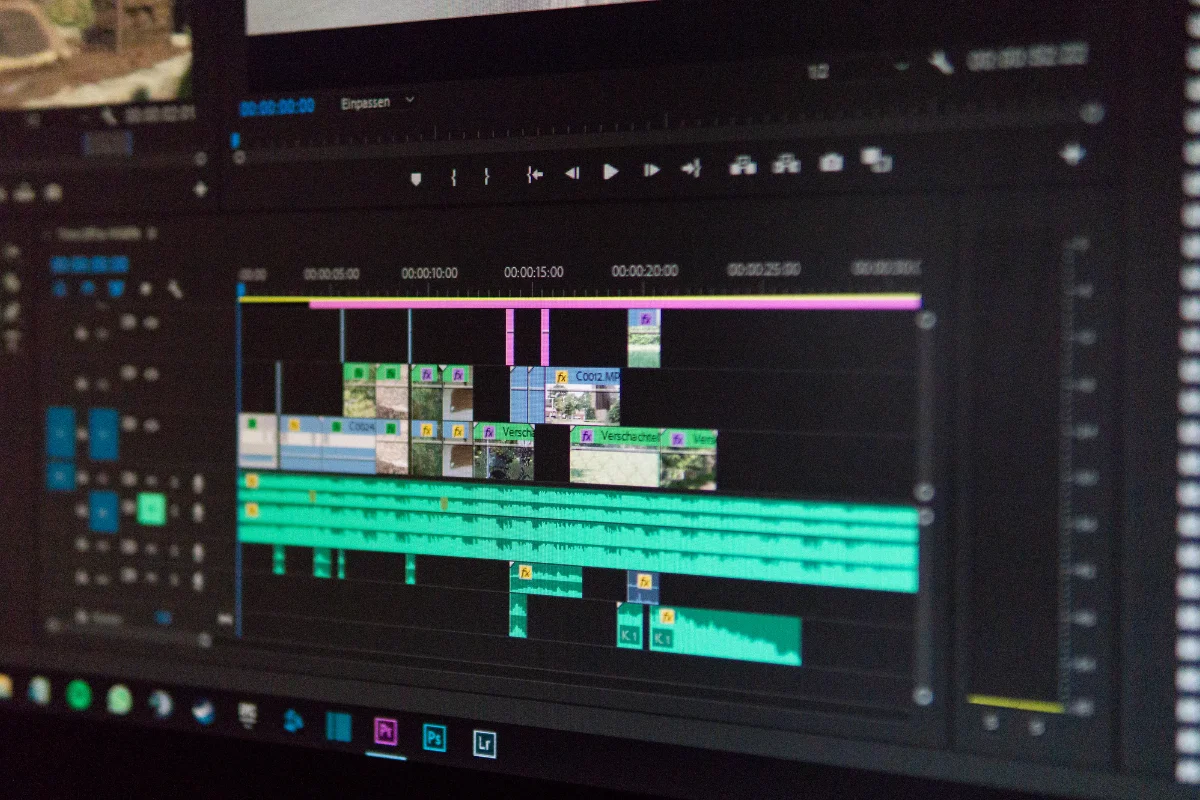
- Editing fundamentals
- Storytelling techniques
- Practical project work
- Audio and video workflows
- Colour correction
- Graphics and titles
- Professional post-production practices
- Feedback from experienced instructors
Software is an important tool, but an editor’s creative decisions ultimately shape the viewing experience.
Learning why a particular cut works can be just as important as learning how to make that cut.
Video Editing Course Near Me: What Should You Consider?
Searching for a video editing course near me can help you find programs that are convenient to attend. However, location should not be your only consideration.
Before enrolling, compare:
- Curriculum and learning outcomes
- Practical training
- Editing software and facilities
- Faculty experience
- Project opportunities
- Course duration
- Class schedule
- Certification
- Industry interaction
A convenient location can make regular attendance easier. However, the overall quality and suitability of the learning experience should remain important factors.
Why Learn Video Editing at SA Film Academy?
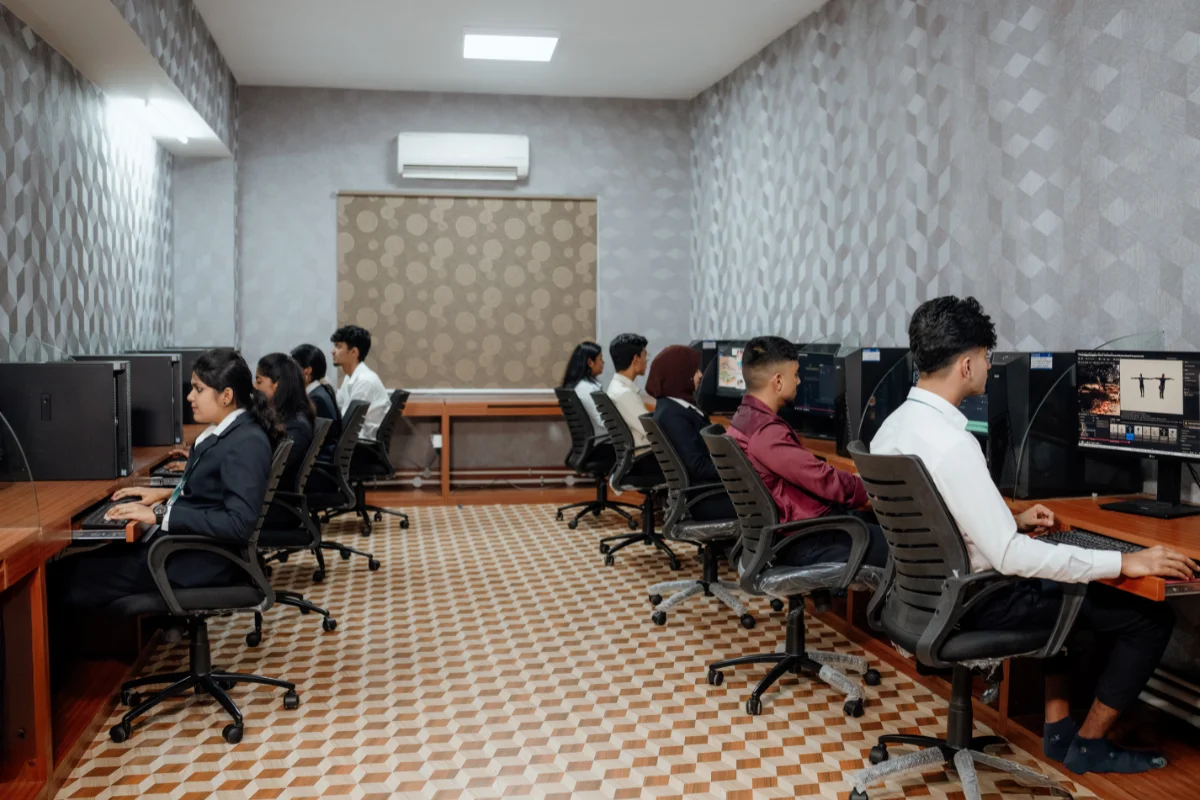
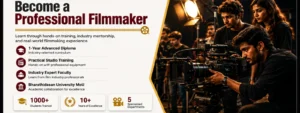
For students interested in video editing courses in Chennai, SA Film Academy offers Editing as one of the five major departments within its one year diploma in film technology.
The program covers:
- Direction & Screenwriting
- Cinematography
- Editing
- Sound
- Graphics & Animation
Learning editing within a broader filmmaking program can help students understand how post-production connects with the other departments.
For example, editors work with footage created by cinematographers, follow the director’s creative vision, and collaborate with sound professionals during post-production. Understanding these connections can help students develop a broader view of filmmaking.
SAFA also provides practical and industry-oriented learning through filmmaking activities, workshops, and interactions with cinema professionals.
The academy’s weekend format can also suit students, working professionals, freelancers, entrepreneurs, and cinema enthusiasts who want to learn filmmaking alongside their existing commitments.
Start Your Video Editing Journey
Choosing the right video editing course is an important step if you want to develop professional post-production skills.
Look beyond the software being taught. Consider the curriculum, practical projects, faculty, facilities, industry exposure, course duration, and learning format.
If you are looking for video editing courses in Chennai, explore the 1-Year Diploma in Film Technology at SA Film Academy and learn how Editing connects with direction, cinematography, sound, and graphics.
Learn the craft. Shape the story. Bring every frame together.
Start your filmmaking and video editing journey with SA Film Academy.